 English
 Deutsch
 Français
 Nederlands
 العربية
 Polski
 Español
 Ελληνικά
 Українська
 Čeština
 Română
 Italiano


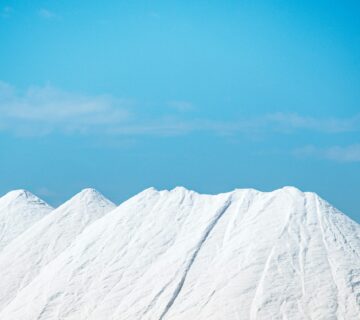
Every source on this page is sodium chloride; they differ in how the salt is won, how the crystals look, and what your market expects on the bag. Siwa salt, from the lakes and the rock deposits, is our main raw material.
| Natural Lake Salt | Natural Rock Salt | PDV Vacuum Salt | Sea Salt | |
|---|---|---|---|---|
| How it is made | Harvested from the salt lakes and flats of Siwa Oasis, then washed and screened | Natural rock salt (halite) from the Siwa deposits, crushed and screened | Purified brine evaporated in vacuum pans, then dried | Seawater evaporated by sun and wind |
| Crystals | Natural crystals, sized to the product | Dense, hard crystals | Very fine and uniform | Irregular, often larger |
| Best for | Tablets, blocks, salt rooms | De-icing, industry, tablets | Buyers who specify vacuum-grade tablets | Brands that want “sea salt” on the label |
Why Siwa comes first
Siwa Oasis lies in a natural depression in Egypt’s Western Desert, about 20 metres below sea level, with a chain of salt lakes such as Birket al-Maraqi and Fatnas, and rock salt deposits around them. A 2021 study in the Arabian Journal of Geosciences found Siwa salt to be of very good quality, needing only simple refining to meet international food-salt standards.
When another source is the right call
Some specifications are written around vacuum salt; some brands are built on sea salt. We produce from both, so you can buy every source from one supplier and one factory.
Choose the source on any product page, or tell us your specification and we will advise.
Reference: Khalil, M. et al. (2021). Evaluation of salts in salt pans, Siwa Oasis, Egypt. Arabian Journal of Geosciences, 14(9).